
As a chef who lives for texture and finesse, I can confidently say this sponge cake is one of my most treasured recipes. Every bite is light as air, with a soft structure that makes it the ideal base for layered desserts, fruity toppings, or a simple dusting of sugar. It’s a timeless cake, yet every time I make it, I’m reminded why it’s still a favorite simplicity done perfectly.
Why You’ll Love This Sponge Cake
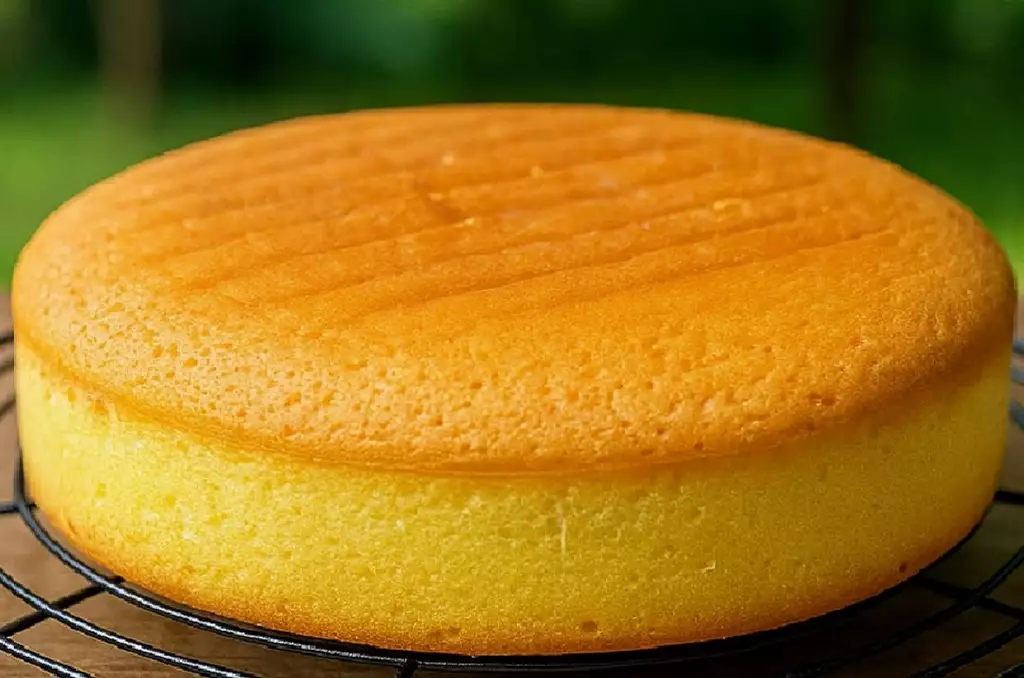
This sponge cake recipe brings together six humble ingredients and transforms them into something truly special. It rises beautifully without butter or oil, thanks to the air incorporated into the egg whites. The end result? A fluffy, golden dome that’s sturdy enough to hold layers yet soft enough to enjoy on its own.
- Light and airy texture: Whipped egg whites create a natural rise without heavy fats.
- Balanced sweetness: Just the right amount of sugar for a not too sweet base.
- No butter, no oil: This cake stays light, making it a great base for creamy or fruity pairings.
- Perfect for layering: Holds its shape beautifully for layered cakes and trifles.
- Customizable flavor: Add lemon zest, orange essence, or almond extract for subtle variations.
Step by Step Guide to Making Sponge Cake
This sponge cake is delicate to mix but surprisingly forgiving once it’s in the oven. Follow these steps and you’ll get a tall, golden, cloud like cake every time.
Ingredients
- 300g of all purpose flour
- ½ sachet of yeast (about 7g or 2 tsp)
- 1 tablespoon baking powder
- 6 medium eggs
- 200g of granulated sugar
- 1 sachet of vanilla sugar (or 1 tsp vanilla extract)
Directions
1: Prepare the Egg Whites
- Separate the eggs. Place the egg whites into a clean, dry mixing bowl.
- Whisk on high speed until stiff peaks form. This can take 4-5 minutes with an electric mixer.
- Set aside. This will be your leavening power no need for butter or heavy ingredients here.
2: Beat the Yolks with Sugar
- In a separate bowl, beat the egg yolks with the sugar and vanilla sugar until pale and thick.
- This step is crucial you’re building structure and sweetness into the base of the sponge.
3: Sift and Combine Dry Ingredients
- Sift together the flour, baking powder, and yeast. Sifting helps keep the sponge light and lump free.
- Gradually add the dry ingredients to the yolk mixture, stirring gently to avoid deflating the batter.
4: Fold in the Egg Whites
- Add one third of the egg whites to the batter to loosen it, then fold in the rest gently using a spatula.
- Do not stir aggressively gentle folding is key to keeping the air in your sponge cake.
5: Bake
- Preheat the oven to 180°C (350°F). Grease and flour a 22 cm (9 inch) round pan.
- Pour in the batter, smoothing the top with a spatula.
- Bake for about 40 minutes or until the top is golden and a toothpick inserted in the center comes out clean.
6: Cool and Serve
- Let the cake cool in the pan for 10 minutes, then remove and transfer to a wire rack to cool completely.
- Serve as is, or slice and fill with jam, cream, or fruit.
Chef’s Notes and Common Troubleshooting
My Tips for Sponge Cake Success
Every time I teach sponge cake to beginners, I emphasize just a few things: patience, room temperature ingredients, and gentle mixing. Here’s what I keep in mind with every bake:
- Room temperature eggs: They whip up more easily and help stabilize the cake structure.
- Clean mixing bowls: Any grease in your egg white bowl can prevent stiff peaks from forming.
- Sift twice if needed: A second sift of the dry ingredients helps prevent dense patches.
- Check your oven: An oven thermometer can save your sponge from being under or over baked.